
Cameron County Arrest Warrants Explained
An arrest warrant is a written order under Texas law. It tells a peace officer, or a person the magistrate names, to bring someone into custody. The magistrate acts after a sworn oath alleging an offense. The warrant itself must identify the person, state the offense, and carry the magistrate's signature and office. The affidavit behind it and the warrant are two separate pieces of the process.
Court routing in Cameron County matters more than the paperwork's label. Felony cases generally run through a District Court, while County Courts at Law hear Class A and B misdemeanors. Justices of the peace and municipal judges handle many Class C matters and magistrate duties. The warrant follows the court and the charge, so the county name alone will not tell you which clerk holds the file.
Cameron County Arrest Warrant Probable Cause
An arrest warrant rests on a magistrate's review of sworn facts, never on a list entry. Texas Code of Criminal Procedure Chapter 15 sets out the magistrate's authority and the basic requirements for the order. A summons works differently. It directs a person to appear, without ordering immediate custody. Once an arrest happens, the person must go before a magistrate without unnecessary delay and no later than 48 hours. The magistrate then gives required warnings and takes up bond. That 48-hour clock covers post-arrest process only. It sets no service window for a warrant search, and it promises nothing about when the case ends. Read Texas Code of Criminal Procedure Chapter 15 for the issuance and post-arrest rules.
Inside a Cameron County Arrest Warrant
Cameron County's magistrate warning and appointment form shows the kinds of fields used around arrest and bond processing. It is a form schema, not a public warrant roster. A web display may omit fields. Ask the clerk for the actual record and its status.
| Warrant number | FORMAT NOT PUBLISHED No consistent public number format was located. |
|---|---|
| Cause number | The case key used to route a question to its court. |
| Charge / class | The offense label and felony or misdemeanor grade shown in the court record. |
| Issuing magistrate | The judge or magistrate who signed the process. |
| Affidavit | Sworn support may be linked to the warrant; public access depends on execution and other exceptions. |
| Bond | May show cash, surety, PR, no-bond, or conditions. Confirm the current terms with the court. |
Cameron County Arrest Warrant Clerks
Start your Cameron County warrant search with the right clerk. The District Clerk is the primary record route for district criminal actions, and the county's nine District Courts each publish their own coordinator contacts rather than one felony warrant counter. Class A and B misdemeanor files sit with a different office. The District Clerk page and the County Clerk Criminal Department page describe those divisions. A court number or cause number will route a call faster than a general inquiry. If the paperwork names a JP or a city court, contact that lower court instead. A clerk can locate a file and walk you through the procedural steps; the judge alone decides whether to recall the warrant or change bond. The county's official pages lay out the separate court and clerk routes, so view the District Courts directory before calling.
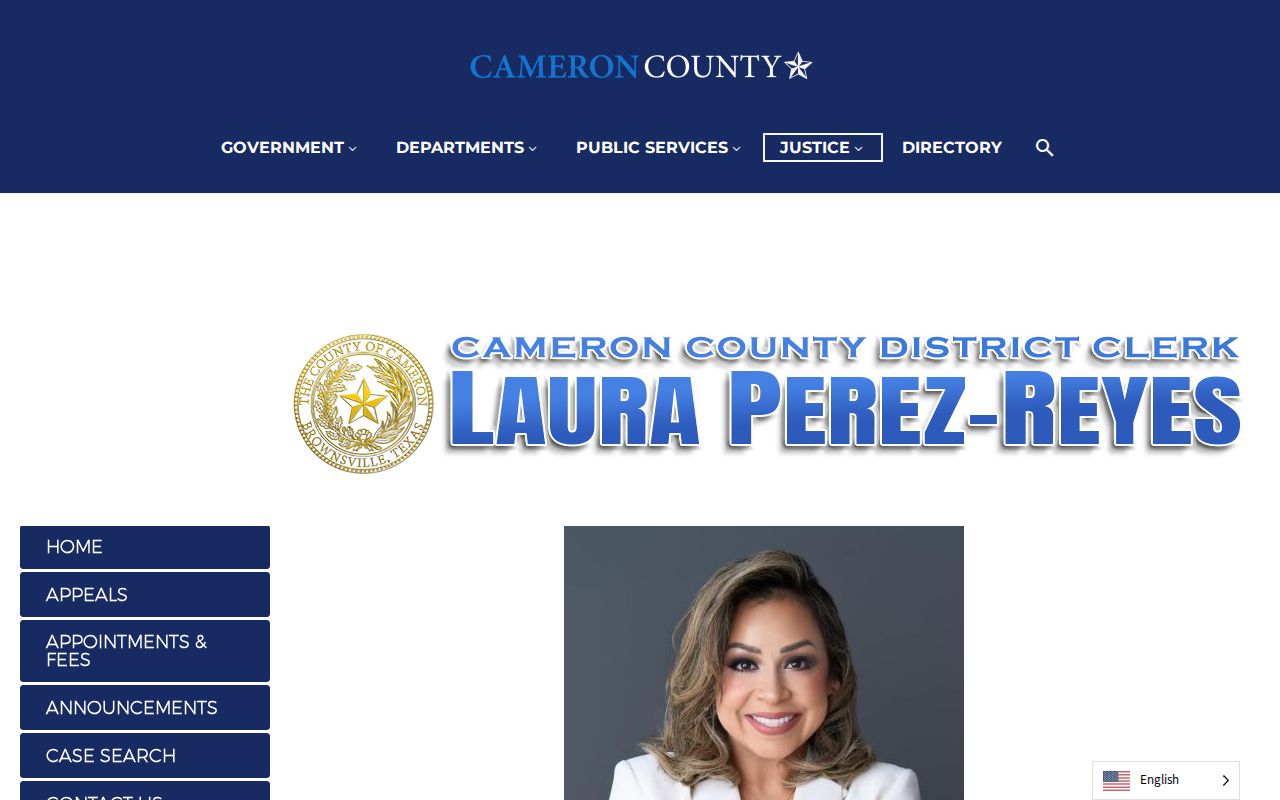
The District Clerk keeps district-court records; city and JP matters use their own clerks.
Serving Arrest Warrants in Cameron County
Who serves a warrant depends on the issuing court and the assignment. The Sheriff, five constable offices, city police, and other named peace officers may all serve process in Cameron County. The Sheriff's page notes that its SWAT team serves high-risk warrants. That is a special team, not the routine unit for every warrant. After an arrest, booking happens at a detention facility. The person then goes before a magistrate for warnings and a bond decision. Keep one thing straight: the jail is not the court that issued the warrant. Booking contact, bond contact, and recall authority can sit in different offices, so confirm which hold or court controls the next step.
Who Serves a Cameron County Arrest Warrant
The court issues a warrant; an agency receives and serves it. Cameron County's Sheriff contact page lists dispatch at 7300 Old Alice Road in Olmito, and the county directory lists five constable offices. City police handle city matters and serve warrants assigned to them. No single agency serves every court's process. For a county-held service question, call Sheriff dispatch at (956) 554-6700 and ask for the correct unit. Treat dispatch as exactly that. It is not a published 24-hour warrant confirmation line. If the real question is whether the court will recall or reset the warrant, call the issuing clerk.
Cameron County Arrest Warrants, Summons, and Bench Process
These court papers carry different triggers and commands. An arrest warrant authorizes custody after a magistrate's probable-cause review. A summons simply calls a person to appear. A bench warrant usually follows a missed setting or another failure to comply in an existing case. Read the issuing court and case number before choosing a response. Cameron County bench warrant details cover the missed-court route.
| Feature | Arrest Warrant | Summons | Bench Warrant |
|---|---|---|---|
| What it orders | Custody under the signed process. | Appearance without an immediate arrest command. | Custody after a missed obligation. |
| Basis | Probable cause under the warrant process. | A court direction to appear. | Failure to appear or comply in an existing case. |
| Who issues it | A judge or magistrate. | The court or authorized officer under law. | The judge handling the pending case. |
| Next route | Counsel, bond, and court instructions. | Appear by the stated date. | Ask the issuing judge about recall or a new setting. |
Cameron County Arrest Warrant Magistrate and Bond Timing
After an arrest in Cameron County, Texas law pushes the process along fast. The magistrate must give initial warnings within 48 hours at the latest. Bond then gets set under Chapter 17. Cameron County describes several routes to release: cash, surety, personal recognizance, and no-bond holds. What it does not publish is one current bond schedule covering every court or warrant. Brownsville adds its own city phone lines, split between criminal warrants, PR and cash bonds, and traffic-warrant records. Those lines serve city cases, not countywide bond terms. The magistrate who issued the order can tell you which bond type applies, what conditions stay in place, and whether another agency hold blocks release. Read Texas Code of Criminal Procedure Chapter 17 for the bond rules.
Cameron County Separates Warrant Counts
The August 2024 magistrate summary splits its warrant counts into separate categories: arrest warrants, capiases pro fine, search warrants, and other bond-condition orders. For that month it reports 16 felony arrest warrants, two Class A or B misdemeanor arrest warrants, zero Class C arrest warrants, zero capiases pro fine, and one search warrant. Read the figures with care. They measure a single month of magistrate activity in Cameron County. They are not a running inventory of active warrants, and a search warrant is not an arrest warrant. Always keep the month and the category attached to any number you cite. See the August 2024 magistrate report for its full breakdown.
If There’s an Arrest Warrant for You
An online result is only a lead. Confirm the court and the current status before you act on one. A Texas attorney can help with an appearance, a motion to recall or quash the warrant, bond, or a planned voluntary surrender. Cameron County publishes no universal walk-in process and no safe-surrender window. A jail counter cannot clear a court order, so do not assume otherwise. If an arrest happens, the magistrate handles warnings and bond, while the issuing court keeps control of the case and any recall. Hold on to every bond paper, order, and payment receipt. Ask the clerk when to check a Sheriff or DPS status again.
Important: An active arrest warrant can lead to arrest during a stop or agency contact. Consult a Texas attorney before appearing in person.